
"It is I."
On being a bit too clever

NOTE: this post is “bonus material” for my memoir My Ride Through Life
Have you ever come up with an idea that you really liked—one that made you think to yourself “I am just so clever”?
My experience has been that, whenever you get that feeling, you should probably run your idea by a trusted friend, because the odds are that your “cleverness” will be your undoing.
It was 1989.
The former director of the CIA, George H. W. Bush, had recently been elected president of the United States, Mike Dukakis was the governor of Massachusetts, and Jim Rice and Roger Clemens couldn’t push the Red Sox any more than four games over .500. That same year, I was working as a house painter, living in Boston, and playing keyboards in a reggae band.
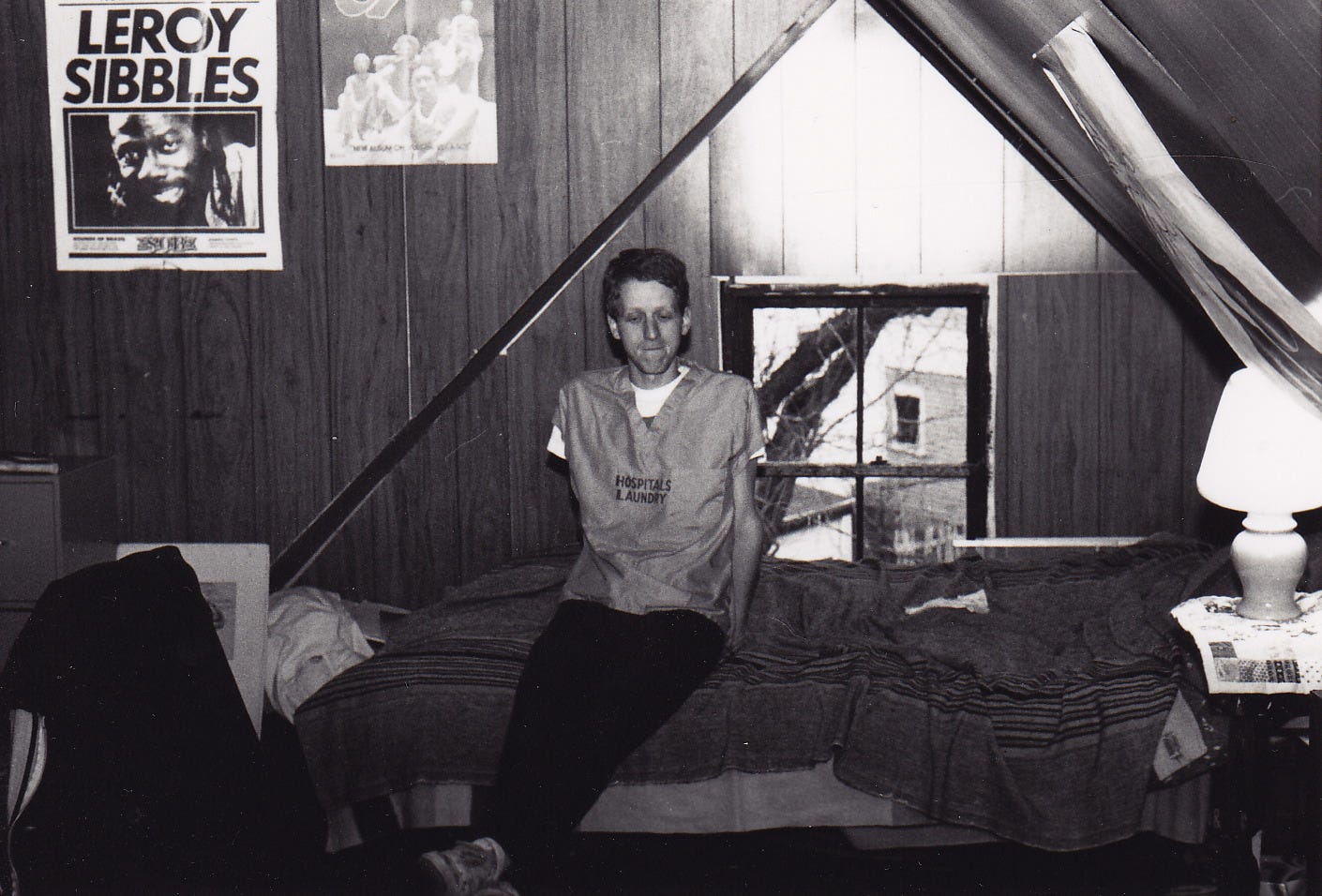
I was also supplying the practice space for the band in the Jamaica Plain neighborhood of Boston, in a house that I was renting with some roommates. The house at 55 Round Hill Street had two main floors topped by a sloppily-finished attic space, with the wood paneling barely hanging onto the walls and the sloped ceiling.
The attic was begrudgingly willing to go along with my plan for it to be my living area and bedroom, despite knowing that it wasn’t designed for such a purpose. All of my stuff was arranged on one end of the attic, with a single deteriorating window facing out onto the street.
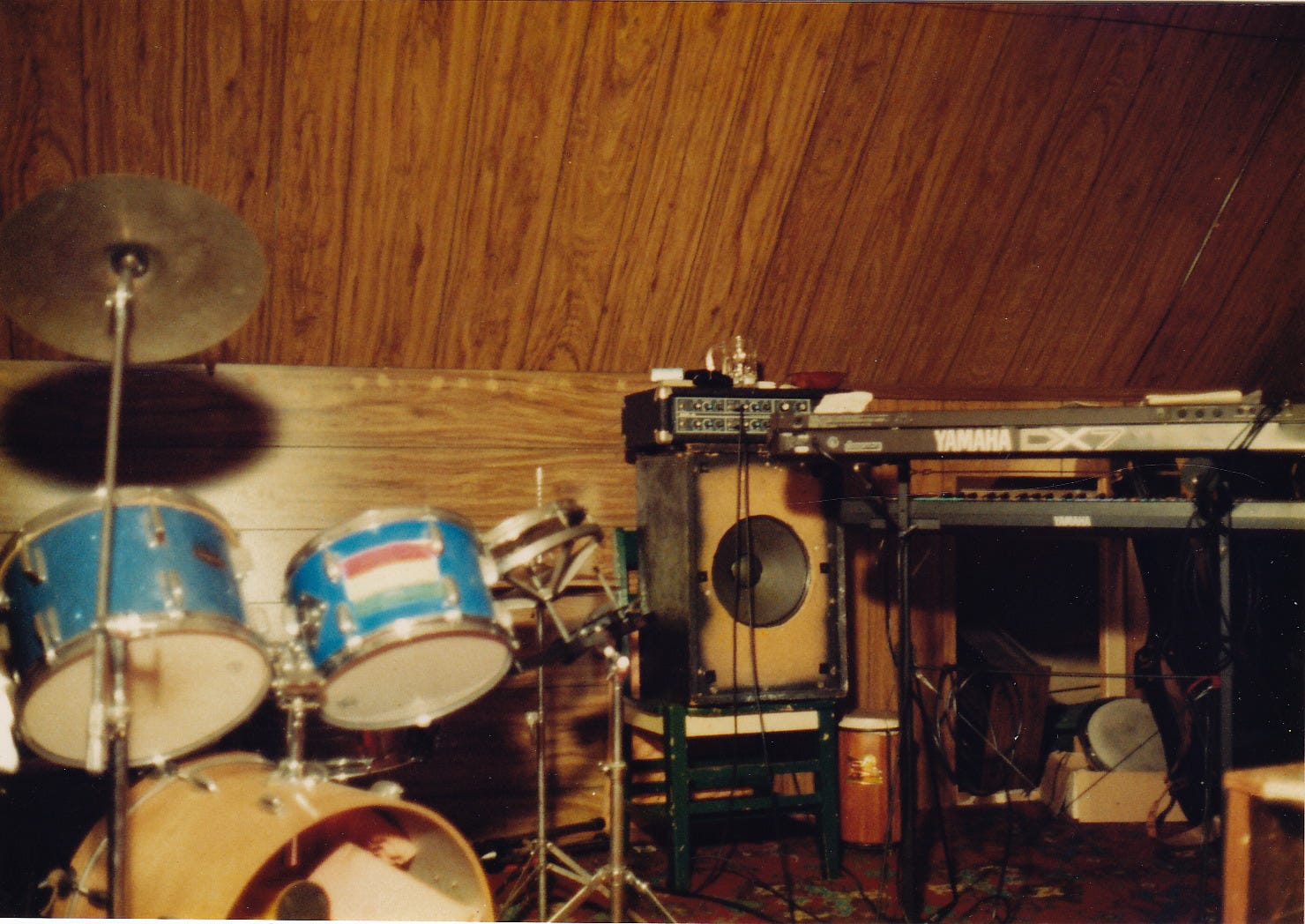
The other end of the attic served another purpose: in it, the band had carved out an area for a little “practice studio”—complete with a drum kit, a PA, and amps for all the instruments.
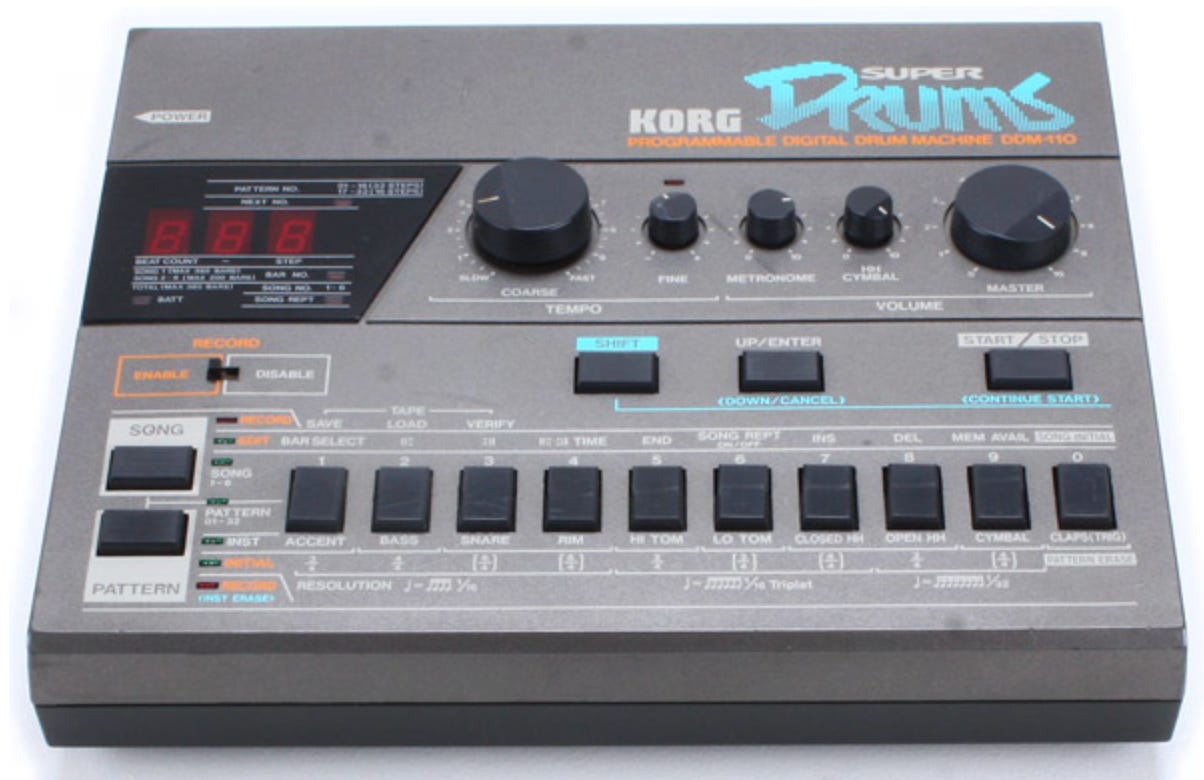
There was just one problem—our band had recently lost our drummer and were working with a KORG drum machine during practices while we scouted for a new “time-keeper.”
The search was on.
In the late 1980s, how did one go about “finding a drummer”?
There was no internet yet: no WhatsApp or email or webpages or Facebook or Craigslist or even MySpace to help in the search. So we used the tools that were available to us at the time: we designed, printed, and posted some flyers that described the band and the position we were looking for. We included the contact information, repeated and printed sideways at the bottom of the page, lined up like little cars in a parking lot. After cutting slits between each, the information was in bite-sized pieces, ready to be torn off by any passersby. We stapled the flyers up in a few choice locations—but we also bought a cheap ad in the Boston Phoenix.
In those days, the weekly Boston Phoenix newspaper printed a special classified ads section dedicated to “Music & the Arts.”
That section, in turn, was broken up into different subsections, including ads for: “Acting”, “Artist services”, “Dance Lessons”, “Gigs”, “Music Lessons”, and “Rehearsal Spaces”:
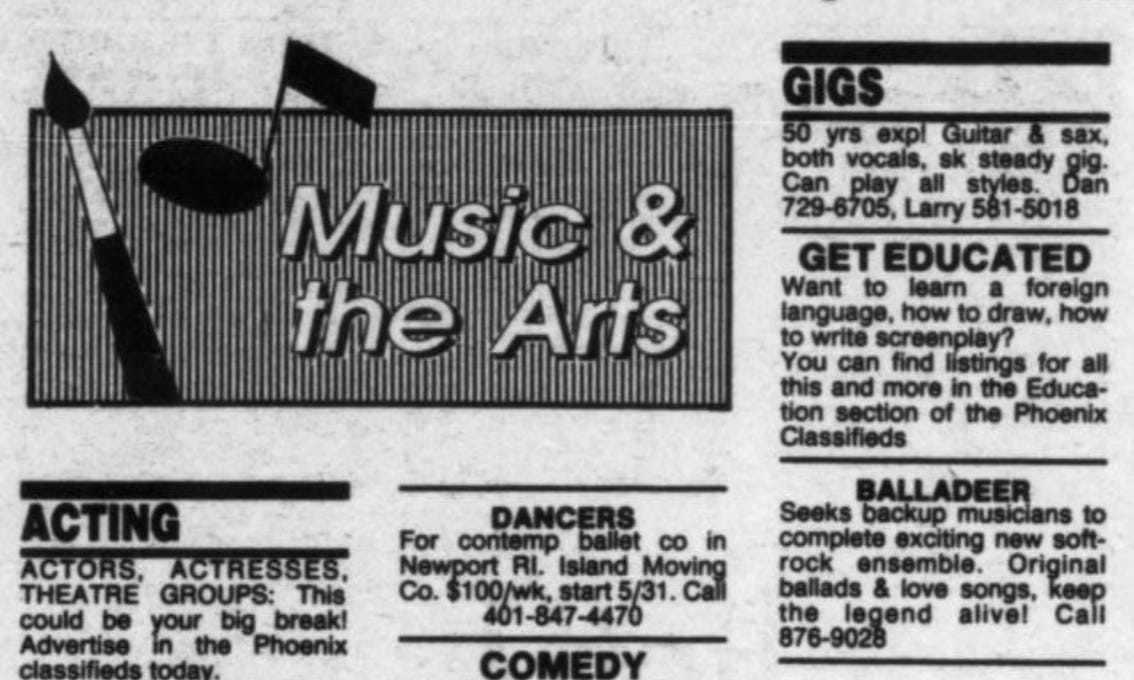
If a band was looking for a musician, those ads would be posted under “Gigs,” which acted as a “musician wanted” section which, in turn, was organized by instrument type, alphabetically, starting with bass players:
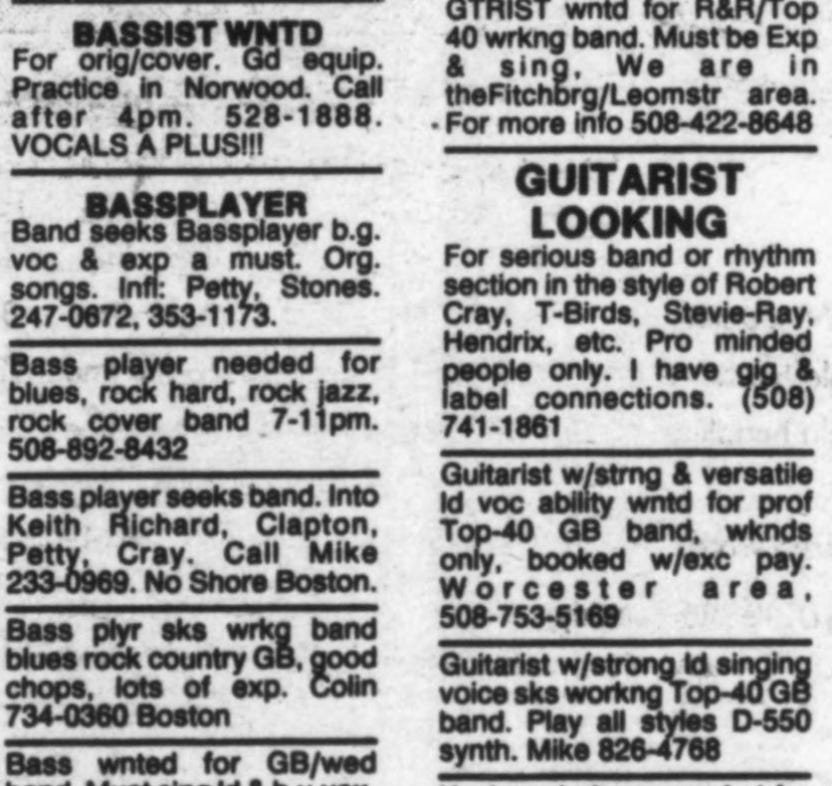
Was this an effective pre-internet way to get the word out?
For us, it was: about a week after posting the flyers and our ad, we got a call from Horace Faith, whose name I knew from the Boston reggae scene—he wanted to try out for the band (not to be confused with Horace Reid, another local reggae drummer). I didn’t really know anything about him, but this seemed promising.
We arranged for Horace to come by for a Saturday practice and sit in with the band to see if he was a good fit.
On that Saturday, the band members all showed up and we jammed for a little while waiting for Horace. It gave us a chance to decide which songs we would try him out with when he arrived.
After about a half an hour, the bell rang.
I went down the two flights of stairs, opened the door, and there was a tall thin man with long dreadlocks standing on the front porch. He said he was a friend of Horace Faith’s and he thought that Horace would have been there already. I said Horace hadn’t shown up yet, but the guy asked if he could come in and wait for his friend. I thought about it for a moment and said sure, come on in.
The guy followed me upstairs to the attic and he hung out with us for a while as we played some music.
He seemed to be enjoying himself.
Eventually, between songs, the guy asked if he could sit in on drums while we waited for Horace. There didn’t seem to be a reason to say no to that either, so we agreed, and the guy went ahead and climbed in behind the drum kit.
He picked up a pair of drumsticks.
He gave us a bit of a strange intro roll for the song we were practicing, but after that, the band kicked in and started playing.
Things deteriorated pretty quickly after that: he was doing wild rolls on the toms and cymbals, with drum hits that seemed out of control, and he was losing his focus on keeping a steady beat. We tried to hold on and keep the band going with this guy on drums, but after a minute or so, we stopped.
Something didn’t seem right…
Why did Horace’s friend want to play the drums when he seemed to not have much skill in that area?
Why were his drum rolls so long and loud and convoluted—what was he trying to prove?
And why hadn’t Horace shown up yet?
Who really was this guy saying that he was “Horace’s friend”?
At that point, I had to ask the guy, with some suspicion: “So…where is Horace, anyway?”
The guy paused, and a smile started to form on his face before he answered, with the slightest pause between each word :
“It is I.”
Apparently, Horace’s “aren’t I clever?” idea was to pretend that he wasn’t a musician, but just some friend of the guy who was going to audition to be our drummer. This would give the band no expectation that he would have any skills when he sat down to play the drums. I suppose his reasoning was that we would be so surprised at how great Horace Faith’s random friend was on the drums that we would offer him the job before his friend Horace even showed up. And then when he revealed his true identity (“it was he”), we would all have a good laugh?
Needless to say, Horace did not get the job. But it is interesting to think how this would have played out differently if Horace had indeed been an impressive drummer. Would we have hired him for the job, or would his little trickery have been a red flag that would make us take a pass?
What if Horace hadn’t pretended to be someone else and had simply shown up and tried out on the drums? It seems obvious that we still wouldn’t have hired him, the only difference being that this little story I’ve told about “being a bit too clever” would no longer itself be so clever.
Epilogue.1:
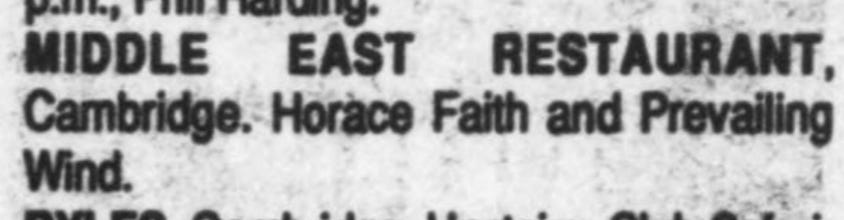
Horace may not have been the drummer we were looking for, but he was an accomplished local musician—he successfully maintained his own bands in the Boston area for several years (as a singer or guitar player, I believe). Below is a listing from November 1990, but his name also appeared in the Boston Phoenix from 1986 to 1994, playing reggae at different venues and under different band names:
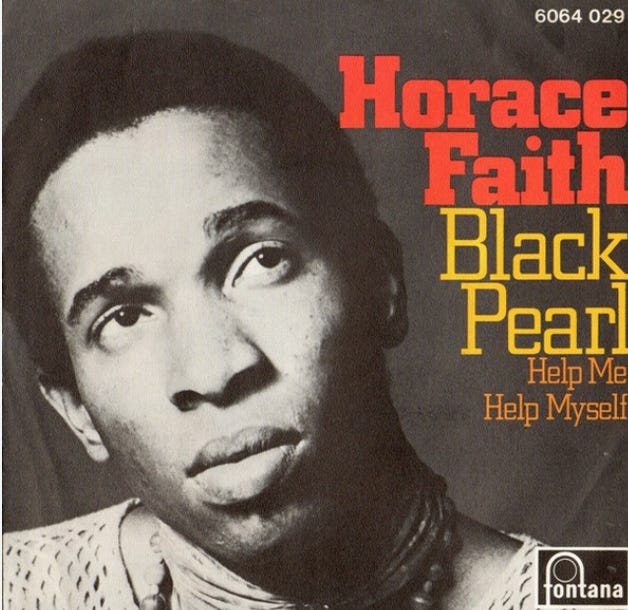
Years later, I learned that Horace had lived in the UK in the early 1970s and had had a successful single with his cover of “Black Pearl” (originally by Sonny Charles & the Checkmates). Horace later moved to the U.S. and was likely living in Cambridge when we met him.
This is the face I recognize of the man I met that day, just without the dreads:
Epilogue.2:
While our tools for finding a new band member were fine, neither of them actually found a drummer for us. In the end, it was a network of connections that came through. We hired Phil Dubwise, whom we had already known for a few years “from around Cambridge” and who had played drums with the local band Afrikan Roots. We needed no flyer or ad to find him, he was a great fit, and he became the drummer for our band, The I-Vibes, for the next five years.
“Further Listening”: I-Vibes Playlist , Black Pearl